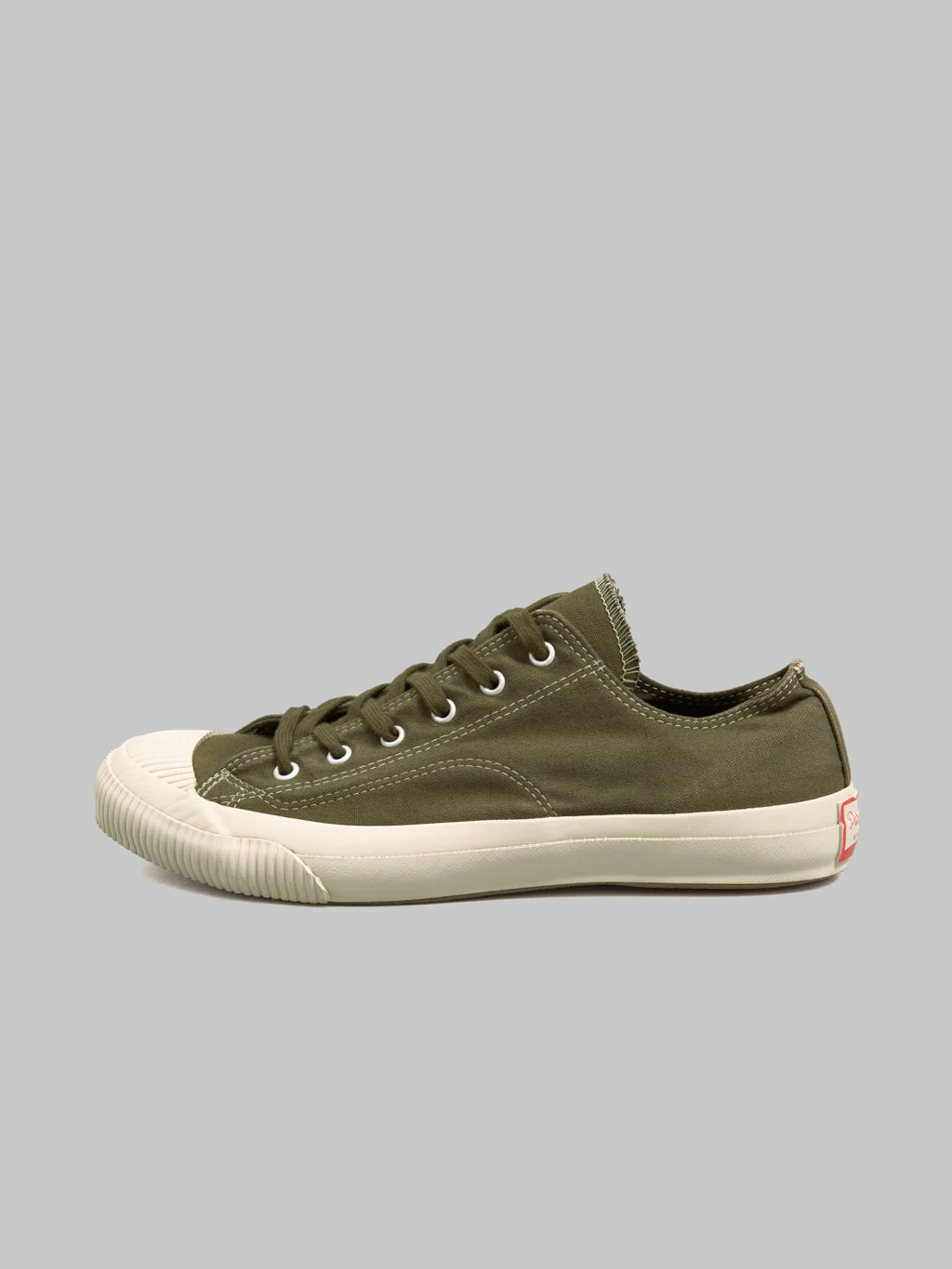
Pras Shellcap Low Iro Sneakers Khaki/Off White
The PRAS Shellcap Low IRO Sneakers are a refined expression of Japanese footwear craftsmanship, combining 1950s athletic sneaker design, rare Kurume vulcanization, and a distinctive product-level reactive dyeing process. Produced by PRAS (Paradise Rubber Athletic Shoes), these low-top sneakers embody a balance of heritage construction, durability, and understated character.
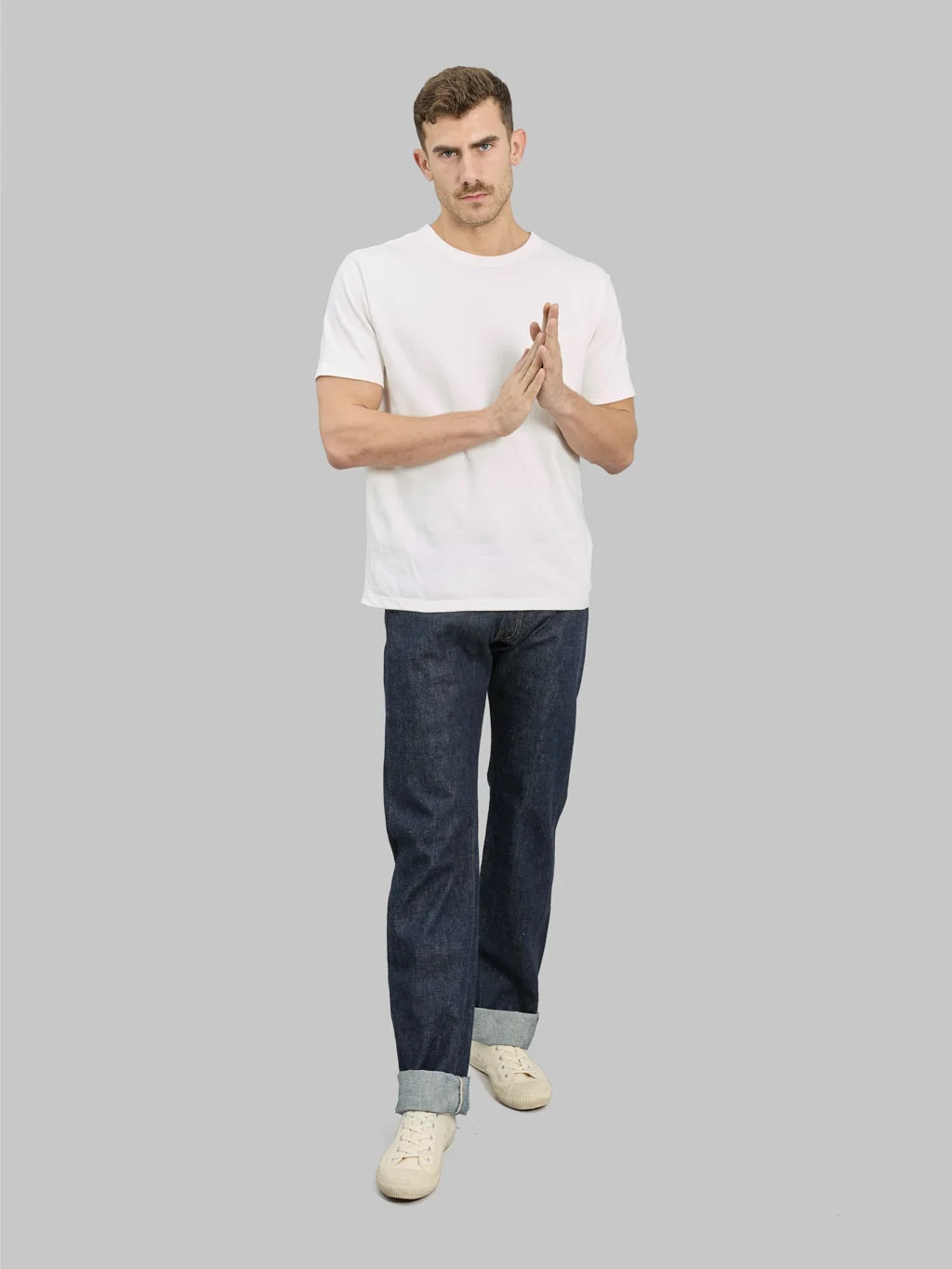
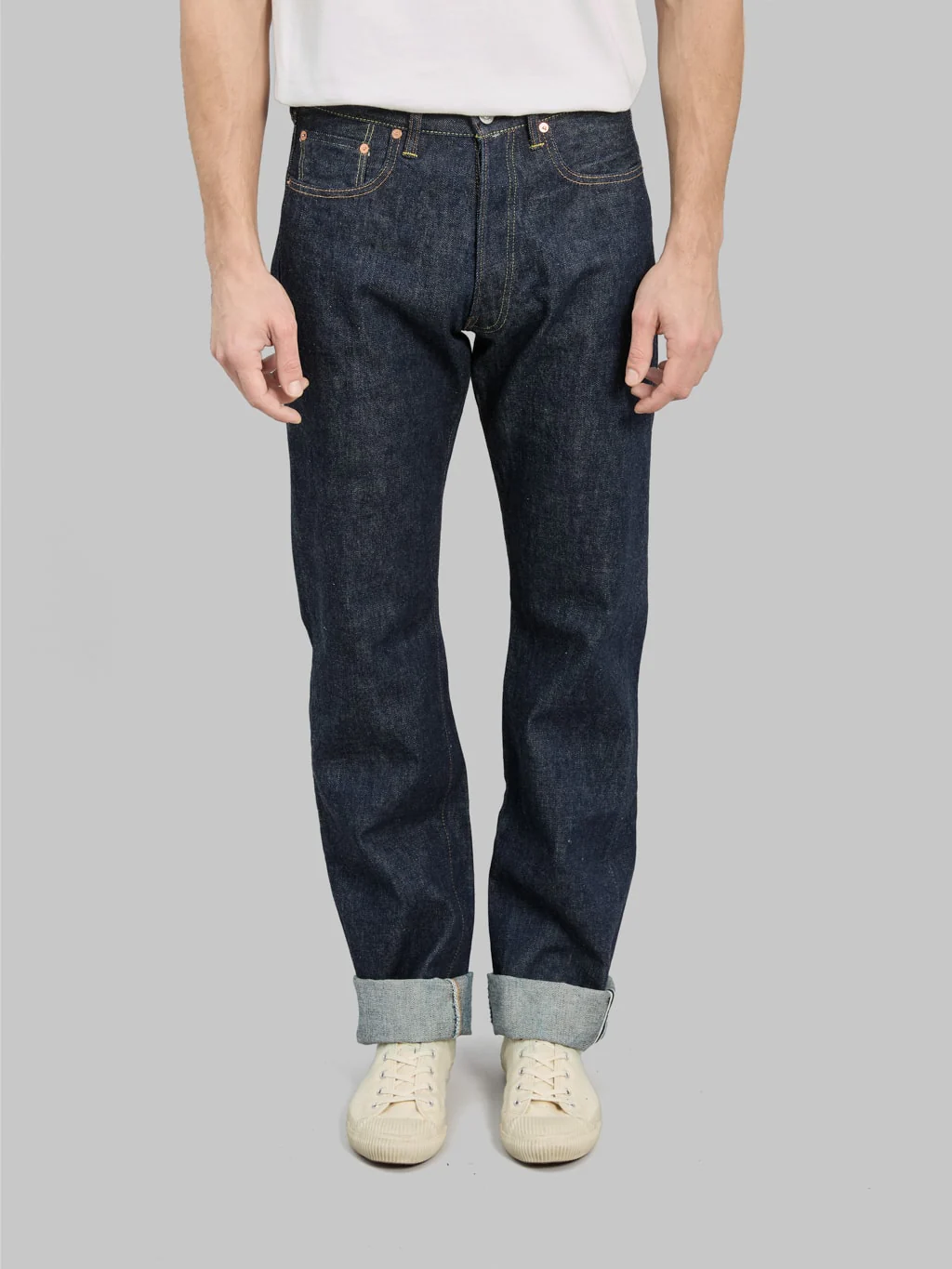
The design is defined by its rounded, bulbous shellcap toe, a signature detail inspired by mid-century athletic footwear, paired with a non-slip rubber sole originally developed for practical performance. Subtle accents such as red contrast stitching and a vintage-style heel panel add visual depth without overwhelming the clean silhouette.
What sets this version apart is the IRO reactive dyeing process. Rather than dyeing the fabric before assembly, the finished sneaker is kettle-dyed using reactive dyes, resulting in rich, uniform color with exceptional depth. Reactive dyeing bonds directly to the fibers, offering outstanding color fastness, resistance to fading, and minimal color transfer over time. Because the dyeing happens at the product stage, each pair carries slight individual character, reflecting the artistry of Japanese product dyeing.
Construction relies on the traditional Kurume vulcanization method, a process that fuses the rubber sole and upper using heat, pressure, and sulfur inside a kiln. Each pair is exposed to temperatures exceeding 100°C for nearly an hour, creating an exceptionally strong bond that resists sole separation and maintains shape over years of wear. This technique is highly labor-intensive and largely performed by hand, which is why only three factories in Japan—including PRAS—still practice it today.
Historically, this vulcanized construction was favored for naval footwear, as it provided superior grip on wet, slippery ship decks. Today, it results in sneakers that are remarkably durable, stable, and comfortable, with a natural flexibility that improves with wear.
Manufactured in Kurume, a region with nearly 150 years of shoemaking history, each pair feels less like mass-produced footwear and more like functional artisan craft—quietly expressive, purposeful, and built to last.
Original: $8,680.04
-70%$8,680.04
$2,604.01Product Information
Product Information
Shipping & Returns
Shipping & Returns
Description
The PRAS Shellcap Low IRO Sneakers are a refined expression of Japanese footwear craftsmanship, combining 1950s athletic sneaker design, rare Kurume vulcanization, and a distinctive product-level reactive dyeing process. Produced by PRAS (Paradise Rubber Athletic Shoes), these low-top sneakers embody a balance of heritage construction, durability, and understated character.
The design is defined by its rounded, bulbous shellcap toe, a signature detail inspired by mid-century athletic footwear, paired with a non-slip rubber sole originally developed for practical performance. Subtle accents such as red contrast stitching and a vintage-style heel panel add visual depth without overwhelming the clean silhouette.
What sets this version apart is the IRO reactive dyeing process. Rather than dyeing the fabric before assembly, the finished sneaker is kettle-dyed using reactive dyes, resulting in rich, uniform color with exceptional depth. Reactive dyeing bonds directly to the fibers, offering outstanding color fastness, resistance to fading, and minimal color transfer over time. Because the dyeing happens at the product stage, each pair carries slight individual character, reflecting the artistry of Japanese product dyeing.
Construction relies on the traditional Kurume vulcanization method, a process that fuses the rubber sole and upper using heat, pressure, and sulfur inside a kiln. Each pair is exposed to temperatures exceeding 100°C for nearly an hour, creating an exceptionally strong bond that resists sole separation and maintains shape over years of wear. This technique is highly labor-intensive and largely performed by hand, which is why only three factories in Japan—including PRAS—still practice it today.
Historically, this vulcanized construction was favored for naval footwear, as it provided superior grip on wet, slippery ship decks. Today, it results in sneakers that are remarkably durable, stable, and comfortable, with a natural flexibility that improves with wear.
Manufactured in Kurume, a region with nearly 150 years of shoemaking history, each pair feels less like mass-produced footwear and more like functional artisan craft—quietly expressive, purposeful, and built to last.